


In terms of cyber security, 2016 has been a tough year for brands. How should you gear up for a new breed of IT threats in 2017?
Information security breaches made headlines this year. As of last month, over two billion records have already been stolen, exposing consumers and businesses to massive risks. Even big Internet companies like Yahoo!, MySpace, LinkedIn, and Weebly weren’t able to dodge the new sneaky tactics of digital thieves.
Nothing’s all that surprising about this. Since brands started deploying their processes via digital channels, new crime forms engineered by tech-savvy wrongdoers, predictably mushroomed. Companies, as well as third-party service providers like call centers, must therefore work even harder to ward off and mitigate data attacks.
Here are five cyber security predictions you should prepare for in 2017.
1. Businesses will spend more on data security.

With all these stories about security hacking, both big and small enterprises are growing terrified that they’d be the next targets. Researchers said this fear is the number one motivator behind the expected bump in information security investments in the next four years.
By 2020, businesses are estimated to set aside $101.6 billion for their security measures. This means they’ll be buying software, services, and hardware to protect their data and that of their constituents—business partners, employees, and consumers.
According to the International Data Corporation (IDC), which released these figures, this translates to a 38% increase from the $73.7 billion that brands are currently spending on IT security.
2. Internal threats will be more prevalent.
As organizations begin to implement more robust security protocols, data criminals will look for other loopholes to exploit. They might try to infiltrate IT systems by targeting specific employees, specifically those with financial authorizations or access to high-profile data.
To do this, they may coerce employees or trick them into clicking on malicious links. Such lapses are enough to let attackers into your system, allowing them to navigate freely within your network. They may then take down or navigate around firewalls so they can locate and steal data.
To prevent this from happening, organizations must educate employees, especially those who directly handle their information—marketers, customer support reps, and finance officers. They must be aware of all the possible ways cyber criminals can penetrate your network so they can report and handle suspicious incidents properly.
3. IoT is still a big security concern.
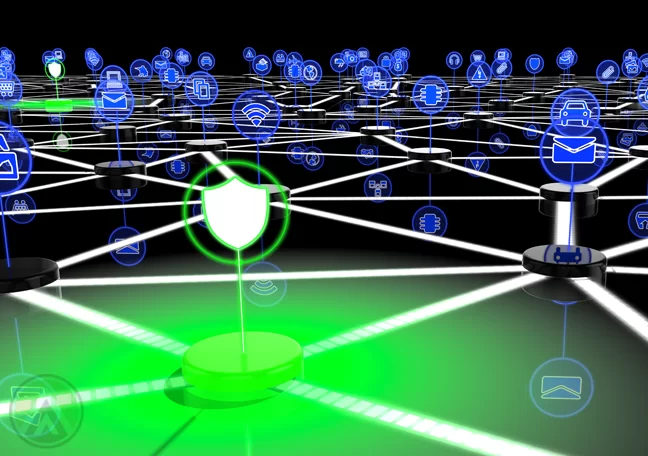
The Internet of Things (IoT)—which refers to the internetworking of smart devices—is undeniably one of the biggest tech trends we’re seeing right now. It’s expected to revolutionize not just business operations but also government processes and people’s lifestyles.
Business Insider predicts that by 2020, around 34 billion devices will be able to connect to the Internet and thus to one another. This is a great leap from the estimated 10 billion devices in 2015. To top this off, they also forecast that nearly $6 trillion will be spent for IoT solutions in the same period.
This is both exciting and troubling for businesses, as hackers tend to target the most popular (and lucrative) tech areas. Right now, IT experts are still puzzled over how they can build and apply security measures for such a broader, more dynamic, and more complex system.
4. Consumers will be more concerned about data security.
Brands aren’t the only ones growing more anxious about cyber security issues. Consumers, who are exposed to risk when their data are siphoned from companies they’ve done business with, are also becoming more concerned about their safety.
Thus, in the coming years, customers are expected to choose brands based on their data protection abilities. Call centers and customer support agents will thus be playing a crucial role in establishing trust between companies and their clientele.
5. Cybercrime will shift to smartphones.
As mobile payment solutions are gradually being mainstreamed, expect cyber criminals to exploit smartphones as well. It’s likely that they’ll search for weak spots from everyone involved in online payment schemes—financial firms and banks, brands, and consumers themselves.
Brands must carefully choose the payment systems they’ll roll out and regularly test for vulnerabilities. This way, they can make the necessary updates to ward off attacks. Consumers must also be educated about various purchase modes, the risks that come with them, and how they can be avoided.