

American customers are now exposed to various cultures, so do they need a second business language when interacting with brands?
As international business and cultural diversity continue to intertwine, addressing language barriers and cultural differences become more important than ever. In fact, a globalized world requires businesses these days to explore more effective ways in dealing with customers. This is true even if American customers make up a majority of a brand’s customer base.
Let’s take a look into the relevance of a second business language for American customers. More specifically, we explore how multilingual customer service impacts customer satisfaction, loyalty, and overall customer experience.
Bilingualism in the US
The United States is home to a diverse population with a good mix of languages and traditions. While English is the dominant language, the linguistic landscape of the US has been undergoing a significant transformation.
The rise of bilingualism is becoming more evident as multicultural communities thrive across the nation. According to the World Economic Forum, at least 13% of Americans know how to speak Spanish and English.
Other languages spoken by bilingual Americans include Cantonese, Mandarin, Tagalog, Vietnamese, and Arabic.
-
Factors that Drive Bilingualism among American Customers
One of the driving forces behind the growing bilingualism in the US is the increasing number of individuals who speak English as a second language (ESL). Many ESL families continue to uphold their native languages, passing them down through generations.
Furthermore, immigrant communities have shaped the linguistic diversity of the country. These communities often maintain strong ties to their countries of origin and value the preservation of their languages. As a result, urban centers across the US reflect the rich cultural heritage of their residents.
Multilingual Customer Service for American Customers
The diversity of the United States brings into focus the significance of multilingual customer service for thriving businesses.
Communicating with American customers in their native languages underscores a genuine appreciation for cultural diversity. In other words, multilingual customer service is a reflection of respect for diverse cultural backgrounds.
Picture a Mandarin-speaking customer in an English-dominant customer service landscape. Offering assistance in their preferred language signifies a genuine dedication to customer-centricity, replacing obstacles with authentic interaction.
-
A Display of Globalization
Implementing multilingual customer service mirrors the dynamics of globalization and international business. Enterprises expanding into new markets recognize that understanding customer preferences is an operational requisite.
Beyond practical communication, multilingual customer service intertwines with the narrative of relationship-building. For example, an Italian-speaking customer engaging with a representative who comprehends their language feels a genuine connection as a result.
This connection not only generates satisfaction but also cultivates enduring brand loyalty. Plus, it recognizes the individual within each customer.
Overcoming Language Barriers for Better Customer Satisfaction
Customer interactions often entail the need for smooth and effective communication. Within this context, however, language barriers can emerge as significant obstacles, even in American customers.
Imagine a scenario where a non-English-speaking customer finds themselves in a customer service interaction dominated by English. This discrepancy in language can result in communication breakdowns and hinder the customer’s overall experience.
However, this isn’t just about accommodating different languages. It’s also about embracing diversity and respecting cultural differences. Speaking the customer’s language is both an acknowledgment of their cultural identity and a way to establish a stronger connection.
Furthermore, the modern business landscape is characterized by globalization and international engagement. In other words, the ability to communicate in customers’ preferred languages becomes a key aspect of successful international business operations.
Cultural Considerations and Customer Loyalty
When it comes to customer interactions, acknowledging cultural differences is a significant factor in cultivating customer loyalty. After all, every customer brings a unique cultural perspective that influences their preferences, expectations, and communication styles.
A second business language directly contributes to creating a more personalized and culturally relevant customer experience. When customers can interact with a brand in their preferred language, it reflects a genuine effort to understand their background.
Cultural considerations encompass not just language but also customs, traditions, and societal norms. Through awareness of these aspects, businesses can adjust their customer service approach to align with cultural sensitivities.
Moreover, cultural relevance in customer service has a direct impact on brand perception. Interactions that align with customers’ cultural values creates a positive impression of the brand’s commitment to diversity and inclusion.
Customer loyalty is deeply intertwined with the emotional connection customers feel towards a brand. Therefore, businesses that make genuine efforts to cater to the cultural differences of their customers forge a stronger emotional bond.
The Impact of Globalization on Customer Expectations
Globalization has redefined the dynamics of business and customer interactions. With borders becoming more permeable and international transactions on the rise, the impact on customer expectations cannot be overlooked.
American customers, in particular, are finding themselves increasingly engaged in global exchanges. This means there should be an understanding of the cultural and linguistic diversity they encounter.
As the world becomes more interconnected, the exposure to different cultures and languages has become a common experience. As a result, there is a shift in customer expectations, especially when it comes to international business engagements.
In this context, a second business language assumes a crucial role in enhancing customer experience. When American customers engage with international partners, being able to communicate in a language besides English becomes a powerful tool.
Moreover, the impact of a second business language on customer satisfaction is profound. Besides, customers who engage in international transactions often grapple with language barriers and the complexities of cross-cultural communication.
However, the availability of a second business language streamlines these interactions. This, in turn, contributes to a more positive perception of the business and its commitment to catering to diverse needs.
Creating a Competitive Edge in International Business
As businesses expand their horizons beyond national borders, the ability to adapt to diverse cultures and languages becomes crucial. In this context, a second business language can tip the scales in favor of those who recognize its significance.
-
International Trade
Engaging in international trade requires a heightened awareness of what different cultures bring to the table. Incidentally, language plays a crucial role in both culture and effective communication.
Therefore, by incorporating a second business language, a company not only breaks down language barriers. It also embraces the cultural intricacies that accompany international transactions.
-
Customer Satisfaction
Meanwhile, in customer satisfaction, the impact of a second business language can be huge. For instance, American customers engaging with foreign brands often encounter language obstacles.
Fortunately, multilingual customer service eliminates these hindrances, allowing customers to transact with confidence and ease. As a result, there is a heightened sense of customer satisfaction.
-
Brand Identity
Furthermore, a second business language holds the potential to reshape a business’ brand identity on the global stage. It showcases a willingness to adapt to the diverse linguistic nature of international trade. In addition, it positions the business as a frontrunner in accommodating global customers.
Multilingual Outsourcing for a Second Business Language
As the world becomes more interconnected, the demand for multilingual customer support has grown significantly. As a result, brands are turning to outsourcing as a strategic solution to provide a second business language for their American customers.
Let’s explore how multilingual outsourcing can benefit brands and enhance the customer experience:
-
Addressing Language Barriers
Language barriers can create significant obstacles in effective communication between businesses and their customers. While English is the primary language in the United States, there is a growing segment of the population that speaks other languages. Hence, catering to their language preferences can be a game-changer.
Multilingual outsourcing allows brands to provide support in languages other than English. This reassures customers can communicate in the language they are most comfortable with. Without the language barriers, brands can reduce miscommunications and improve customer satisfaction.
-
Building Trust and Loyalty
When customers can interact with a brand in their native language, it creates a sense of familiarity and trust. With this in mind, multilingual outsourcing allows brands to build stronger relationships with American customers who can speak other languages.
This cultural sensitivity can lead to increased customer loyalty, as customers engage with a brand that understands their unique needs. Basically, a second business language allows brands to create a personalized and inclusive customer experience.
-
Expanding Market Reach
The American customer base is incredibly diverse with individuals from various linguistic backgrounds. So, by offering multilingual support through outsourcing, brands can tap into new markets and reach a wider audience.
This expansion of market reach opens up opportunities for growth and revenue generation. Brands that invest in multilingual outsourcing enable a connection with a broader demographic and explore untapped segments of the market.
-
Overcoming Cultural Differences
Cultural nuances can greatly impact customer interactions and perceptions. Even among American customers, what may be considered appropriate in one culture might be interpreted differently in another. But multilingual outsourcing is the best way to deal with this.
Outsourced customer support teams that are well-versed in various cultures can provide solutions that align with cultural norms and expectations. This level of cultural sensitivity can prevent misunderstandings and ensure that customers feel respected and valued.
-
Improving First-Call Resolution
Efficiency in customer support is a critical factor in shaping customer satisfaction. On that note, multilingual outsourcing can contribute to improved first-call resolution rates. Through this multilingual advantage, customers can explain their issues and receive solutions from the get-go.
This reduces the need for multiple interactions and enhances the overall customer experience. Simply put, multilingual support helps provide effective solutions promptly.
-
Access to Specialized Expertise
Outsourcing multilingual customer support gives brands access to specialized expertise. In addition, a reputable outsourcing provider ensures a team of trained professionals who are fluent in the required languages.
Of course, this expertise isn’t just about language skills. It also includes a deep understanding of cultural nuances, regional preferences, and effective communication strategies.
Conclusion
While English remains the primary business language in the United States, having a second language can still prove beneficial. Multilingual customer service can help with this, addressing language barriers, embracing cultural diversity, and enhancing the overall customer experience.
In other words, offering a second business language is a wise decision that drives customer loyalty and long-term success.
If you need help in deciding another business language, outsourcing your multilingual call center services to a third-party firm like Open Access BPO is your best bet. We offer customer service, back office, and content management in over 30 languages.
Our Las Vegas, Nevada site also offers onshore solutions for US-based businesses looking for home-based onshore call center solutions. Get in touch with us to outsource.
Multilingual call center outsourcing is gaining popularity among businesses seeking to accommodate the varied needs of their diverse customer base.
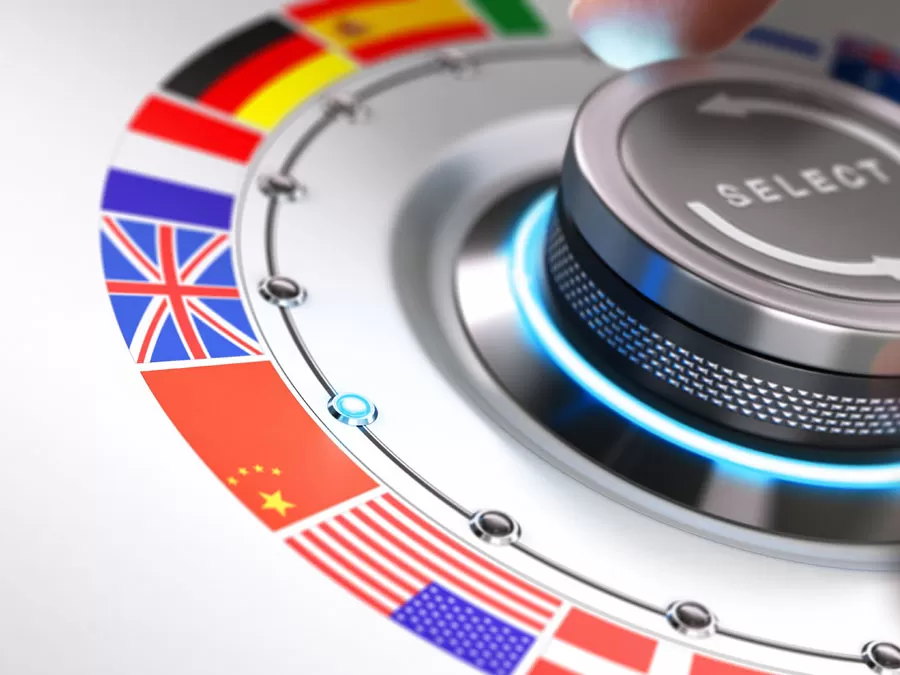
It’s become a necessity in countries where more than two languages are spoken. For largely English-speaking countries like the USA, is a second business language equally needed, considering that it has the world’s largest population of English speakers?
The answer may differ from company to company, of course. But since it’s a huge cultural melting pot, businesses catering to the North American market would definitely benefit from linguistically skilled professionals.
Bilingualism in America
The US has no official language. However, English is the most commonly used language in North America, where bilingualism is also prevalent.
The country’s other main languages were brought in by immigrants centuries ago. Native and indigenous tongues are still spoken in some states, while others like Louisiana and New Mexico are de facto bilingual. For example, many speak French and Spanish in these states apart from other languages used.
What the American market speaks

The US population boasts a rich cultural diversity, with people of all colors and ethnicities. So, it’s no surprise that Indo-European and Asia-Pacific languages are widely spoken across the country, as well.
Spanish tops all other foreign languages prevalent in America, with 43.2 million native speakers.
Other main languages include Chinese languages, Tagalog, Vietnamese, French and French Creole, German, Korean, Russian, Arabic, Italian, and Portuguese.
What other business language should you use?
Bilingualism is a powerful trait to have in the US where billions of dollars come from economic international trade. Choosing another language as a medium for business and customer service transactions depends on the audience you cater to. Businesses must also consider the availability of language resources and a bilingual workforce. So, what second language should you provide for your multilingual and multicultural customers?
If you need help in making that decision, outsourcing your multilingual call center services to a third-party firm like Open Access BPO is your best bet. We offer customer service, back office, and content management in over 30 languages. Our Las Vegas, Nevada site also offers Open Access BPO Onshore™ solutions for US-based businesses looking for home-based onshore call center solutions. Get in touch with us to outsource.